
KEYNOTE SPEAKERS
Syntrend Creative Park 5F
CLAPPER STUDIO
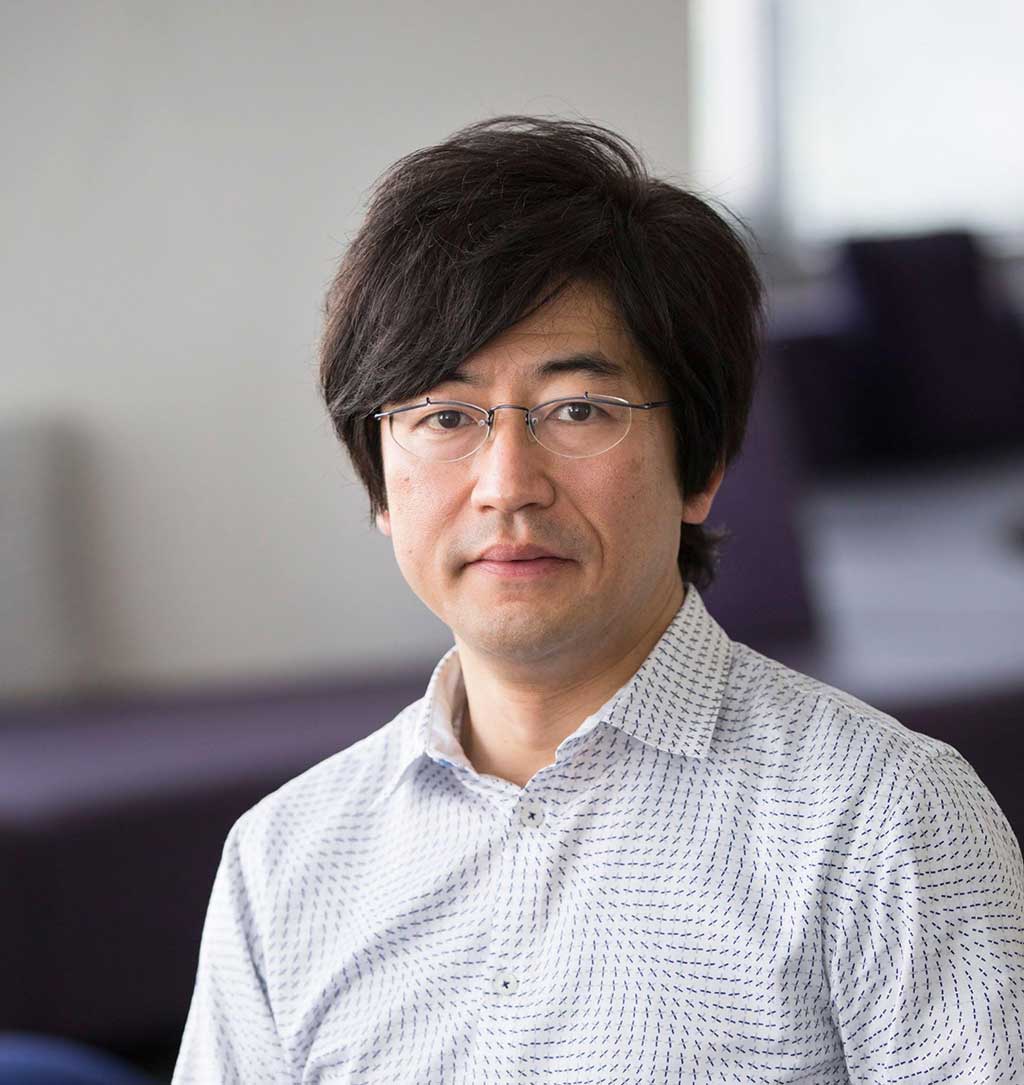
Jun Rekimoto
Director, Sony CSL Kyoto Laboratory
Jun Rekimoto earned his Ph.D. in Information Science from the Tokyo Institute of Technology in 1996. Since joining Sony Computer Science Laboratories (Sony CSL) in 1994, he has led pioneering research in Human-Computer Interaction, augmented reality, and Human Augmentation. He founded the Interaction Laboratory in 1999 and currently directs Sony CSL Kyoto Laboratory. Rekimoto is also Professor Emeritus of the University of Tokyo.
His projects include NaviCam, one of the world's first handheld AR systems; CyberCode, an early marker-based AR platform; and SmartSkin, a foundational multitouch technology. His recent work explores Human-AI Integration, silent speech interfaces, and the Internet of Abilities (IoA). He has received numerous honors, including ACM SIGCHI Academy membership and two ACM UIST Lasting Impact Awards.
Abstract
While traditional HCI (Human-Computer Interaction) is a research field that focuses on the interface between humans and machines, I advocate for Human Augmentation—humans enhanced by technology. The scope of augmentation extends beyond intellectual enhancement to encompass sensory, cognitive, physical, and existential dimensions. This augmentation extends beyond individual humans to develop into a future society called IoA (Internet of Abilities), where people and technology merge on networks and their capabilities are complementarity enhanced, leading to a world of Human-AI Integration where AI becomes integrated with human abilities. I will introduce examples such as silent speech, which enables communication without vocalization, and skill transmission systems where human vision merges with real-world agents, and discuss the future relationship between humans and technology.
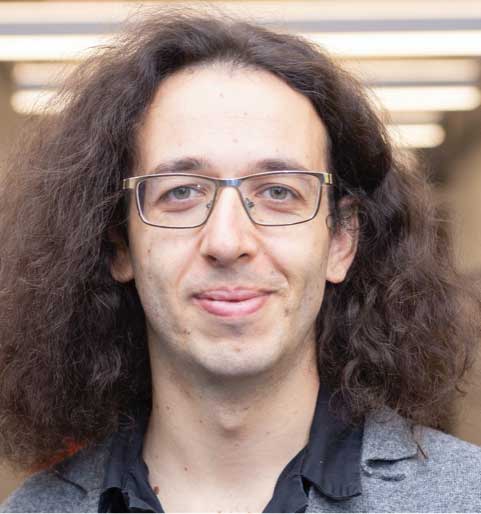
Pedro Lopes
University of Chicago
Pedro Lopes is an Associate Professor of Computer Science at University of Chicago, who focuses on integrating computer interfaces with the human body. His novel types of computers augment the body, not just cognitively, but physically.
Pedro's work has received several awards, including eight ACM CHI/UIST Best Papers, and has captured the interest of the public in outlets such as the New York Times. Pedro is one of the technical program chairs of CHI 2026, one of the program chairs of UIST 2024, a Sloan Fellow, and a recipient of the NSF CAREER Award and the IEEE VR New Significant Researcher Award.
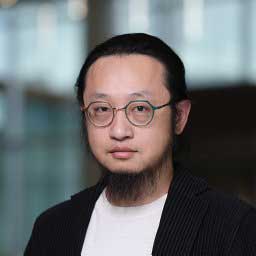
Huaishu Peng
University of Maryland
Director, Small Artifacts Lab (SMART Lab)
Huaishu Peng is an Associate Professor of Computer Science at the University of Maryland and director of the Small Artifacts Lab (SMART Lab). He explores tangible computing through an interdisciplinary research agenda that makes electronics more repairable, interfaces more accessible, and technology a medium for cultural expression.
His work has appeared at CHI, UIST, and SIGGRAPH, earning multiple Best Paper and Honorable Mention awards, and has been featured widely in the media, including Wired, MIT Technology Review, TechCrunch, and Gizmodo. He is also a recipient of the NSF Award to Advance Semiconductor Learning, and one of the subcommittee chairs of CHI 2026.
Abstract
Printed circuit boards (PCBs) are the hidden foundation of modern devices, yet their rigid, single-use design contributes to a growing global e-waste crisis. This talk explores how reimagining PCBs for circularity by making them reusable, reconfigurable, and dissolvable can reshape not only hardware but also human–computer interaction. I will present three systems: SolderlessPCB, which removes the need for solder so chips can be detached and reused; PCBRenewal, which enables a single board to be reconfigured for different applications, from a radio to a Game Boy; and DissolvPCB, the first fully dissolvable, 3D-printed PCB that recovers up to 98% of materials after use. Beyond their technical contributions, these systems show that sustainability is also an HCI challenge, empowering designers, educators, and engineers to assemble, repair, and repurpose electronics in new ways. By reframing circularity as an interactive design principle, this work demonstrates how computing can align with human values of repair, adaptability, and sustainability.
Andrea Bianchi
Adjunct Professor, School of Computing
Director, Make Lab · KAIST, South Korea
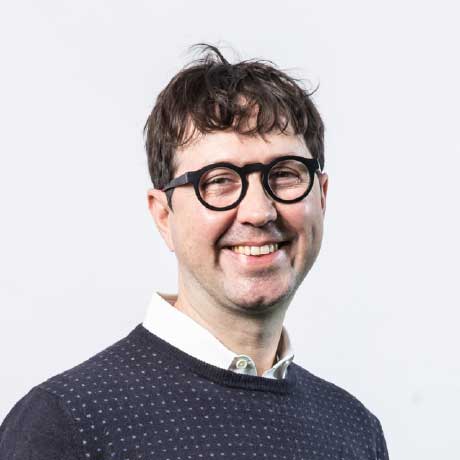
Andrea Bianchi is an Associate Professor in the Department of Industrial Design, an Adjunct Professor in the School of Computing, and the director of the Make Lab at KAIST, in South Korea. He researches in the field of Human-Computer Interaction (HCI), focusing on building tools for prototyping interactive systems and hardware devices for body augmentation in Mixed Reality. He is one of the program chairs of UIST 2025.
Before joining KAIST, he worked at Sungkyunkwan University (Korea) as a faculty member in the Department of Computer Science, and as a video game programmer for a New York startup. Andrea has published in major venues, including ACM CHI, UIST, and IMWUT, and his work has been recognized with multiple Best Paper Awards and Design Awards. His work has been covered by Engadget, ZDNet, New Scientist, MAKE, and Gizmodo, among others. Andrea received a Ph.D. from KAIST in 2012, and his Master's from New York University in 2007.
Abstract
Since the dawn of humanity, the history of the human race has been reflected in the tools we create and use. Many of these tools augment our physical capabilities: power tools enhance strength, bicycles improve locomotion efficiency, and glasses and microscopes extend vision and our ability to explore the world. Yet tools do more than amplify physical abilities—they also shape the way we think and understand reality. As expressed by the saying “if all you have is a hammer, everything looks like a nail” (Maslow’s hammer), tools can unconsciously influence our perception of the world, our modes of reasoning, and our understanding of how to interact with our surroundings. At the same time, tools serve as catalysts for reflection. They act as lenses through which we engage in a dialogue with the world, offering situated affordances that enable activities previously impossible and reshaping how we approach problems, creativity, and design practice. In this presentation, I will showcase examples of digitally augmented physical tools from my lab that transform our perception of reality and offer new perspectives on the role of design. These examples highlight prototyping and making not merely as a means to produce an end result, but as an active process of exploration, reflection, and decision-making.
INTERACTIVE MARKET
Syntrend Creative Park 12F · SYNTREND SHOW
15:30 – 20:00
Humanities × IC Program 晶創人文
National Science and Technology Council (NSTC)
The NSTC's Department of Humanities and Social Sciences initiates the Humanities × IC Program, fusing computer technology with art to realize the vision of humanities driving chip innovation.
The main theme for this year, Democratizing Chip Innovation, is presented in collaboration with the APMAR, TAICHI, and ISAT conferences, alongside the OpenHCI student workshop, inviting the public to experience firsthand how blending humanities and technology shapes innovative applications for our future by demonstrating cutting-edge interactive technology.
TAICHI Taiwan Association of Human-Computer Interaction
Founded in 2016, TAICHI promotes research, education, and international collaboration in Human–Computer Interaction, connecting Taiwan's HCI academic and industry communities.
The association explores Human–AI Collaboration, XR, Smart Objects, Sustainable Design, and Future Living.

APMAR Asia-Pacific Workshop on Mixed and Augmented Reality
APMAR has played an important role in promoting mixed reality research and collaboration across the Asia-Pacific region.
The workshop provides a friendly and focused environment for researchers, practitioners, and students to present their work, exchange ideas, and engage with experts in the field.

ISAT International Symposium on Art & Technology
ISAT is dedicated to advancing research collaboration and academic exchange in the fields of art and technology, interactive media, artificial intelligence, design, and digital culture. It provides a platform for researchers, artists, designers, practitioners, and students to share research findings, creative practices, and innovative ideas.
Through paper presentations, artwork exhibitions, poster sessions, and thematic forums, ISAT fosters interdisciplinary collaboration and deepens exchanges and connections between Taiwan and the international art and technology community.
PERFORMANCES
Syntrend Creative Park 12F · SYNTREND SHOW
17:30 – 20:00
Future Puppetry: Realms of Illusion 《未來布袋戲:幻相・乾坤》
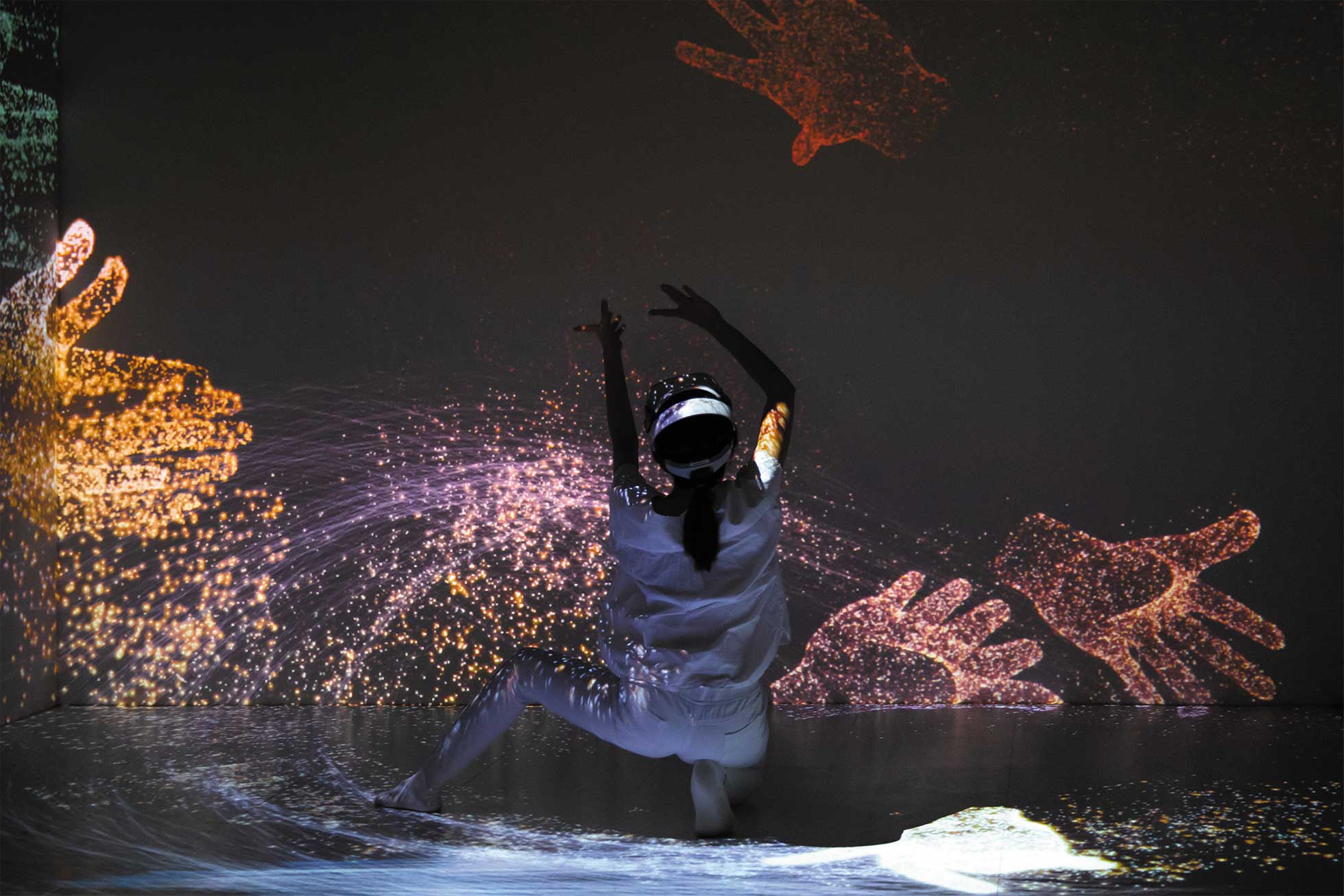
Future Puppetry: Realms of Illusion brings together Taiwanese glove puppetry (Budaixi), mixed reality (MR), and contemporary dance in an immersive performance experience. The performance opens with a traditional narration by a Budaixi puppeteer, guiding Sun Wukong and a Dan character across the boundary between the physical and virtual worlds.
As the puppets transcend the confines of the palm stage, dancers interact with MR technology, virtual puppets, and flowing particle effects, extending puppeteering gestures into full-body movement. Through this process of digital translation, the embodied aesthetics of Budaixi are reimagined, creating an immersive future theater where tradition and technology converge.
- Team
- Chun-Cheng Hsu, Wei-Chen Yen, Yi-Jen Lin
- Performers
- Yi-Jen Lin, Siang-Fu Zeng
- Puppetry Master
- Yong-Ting Lai
unix_time Opening Show 開幕表演
unix_time is a live-coded electronic sound performance generated in real time. Built from numbers, countdowns, warning signals, and system notification sounds, the piece organizes an otherwise meaningless sequence of digits into a sonic structure that continually approaches an ending.
Numbers, in themselves, do not contain events. They are simply arranged symbols. Yet once they begin to operate as a countdown, they acquire a sense of direction. Rather than treating the countdown as a fixed symbol or metaphor, this work presents it as an empty structure. As the numbers draw closer to zero, what emerges is not a specific event, but the way we project an imagined future onto a sequence of numbers.
Hochiaowei Practices is an independent creative collective spanning speculative design, independent publishing, live coding, and open-source education. Its initiatives include DML (Digital Medicine Lab) for speculative design and new media, TPS Press (tshut-pán-siā) for experimental design publishing, KIKORI Collective and TOPLAP NTUST for live coding and sound practice, and SNN (School of New Now) for open-source creative learning.

TOPLAP NTUST Live-Coded Electronic Music Collective
TOPLAP NTUST is an electronic music collective centered on live coding, integrating real-time visuals and live performance. Extending the spirit of the international TOPLAP and Algorave communities, it uses generative sound and image to position live coding as an evolving music culture and lifestyle.
- Ting Yi
- Heng-Hao Wang
- Cong-Wei Wang
- I-Kai Liao
- Ai-Yun Chiu
- En-Yu Liu
- Ching-Hao Chan
- Pei-Chen Lin
- Zec Lai
- Ruei-Shan Tsai